
GLP-1 Myths, Debunked
If you've been on the internet at any point in the last three years, you've heard about GLP-1 medications. You've also heard that they melt muscle, ruin your stomach forever, cause your face to collapse, and that the moment you stop taking them every pound comes back with interest. Let's go through what the research actually shows — with as much honesty and as little hype as possible.
First, a quick primer. GLP-1 (glucagon-like peptide-1) is a hormone your gut already makes after meals. It tells your brain you're full, slows stomach emptying, and helps your pancreas manage blood sugar. Semaglutide (Ozempic, Wegovy) and tirzepatide (Mounjaro, Zepbound) arereceptor agonists— they bind to the same receptor and amplify the signal your body was already trying to send.
In other words: your gut has always been trying to tell your brain you're full. These medications just give it a megaphone.
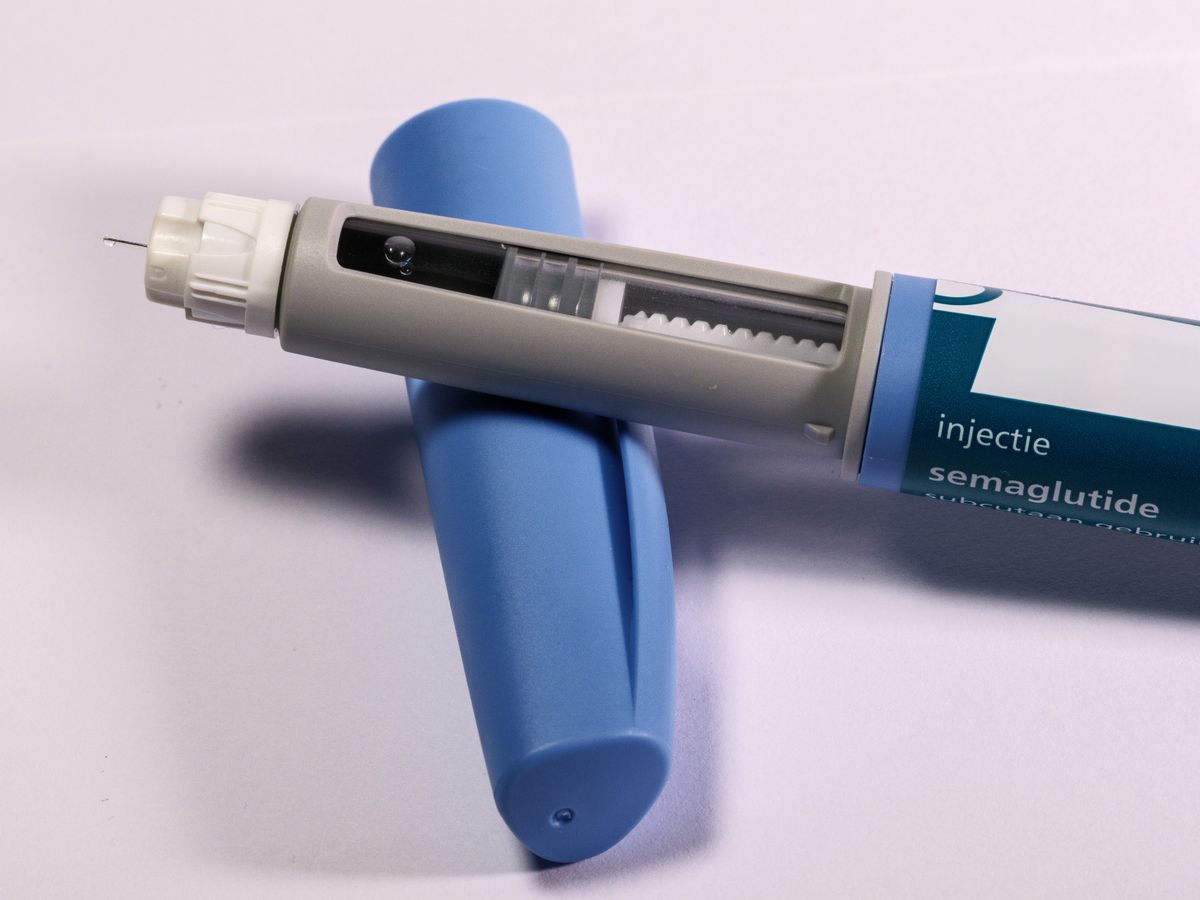
GLP-1 receptor agonists are typically delivered via a once-weekly subcutaneous injection.
Myth 1: "They're just expensive appetite suppressants."
The Verdict:Wrong. GLP-1s do far more than reduce appetite.
Old-school appetite suppressants worked by jacking up your central nervous system — think phentermine, ephedra, and the late great fen-phen, may it rest in peace. GLP-1s work on a fundamentally different system: the gut-brain axis. They slow gastric emptying, reduce "food noise" (those intrusive snack thoughts at 9:47 p.m.), improve insulin sensitivity, and lower inflammation.
In the landmark STEP 1 trial published in the New England Journal of Medicine, patients on semaglutide lost an average of 14.9% of body weight over 68 weeks, compared with 2.4% on placebo. Tirzepatide has shown even greater results — often in the 20–22% range in head-to-head data. No diet pill in history comes close.
Myth 2: "You'll just lose muscle and end up skinny-fat."
The Verdict:Only if you do nothing. With protein and resistance training, muscle loss is minimal.
This is the myth that gets the most airtime, and it deserves a real answer. Yes, any time you lose weight — diet, surgery, medication, doesn't matter — some portion is lean mass. That's biology. The question ishow muchandcan we minimize it.

Resistance training and adequate protein intake are the two most important variables for preserving lean mass during GLP-1 therapy.
A 2025 prospective study of 200 adults starting semaglutide or tirzepatide who were coached on resistance training and protein intake found that at 6 months they had lost about13% of body weight but only 3% of muscle mass. A 2025 systematic review found that GLP-1 therapy was "not associated with a clinically meaningful decline in muscle mass or strength" when patients were active.
Compare that to patients given the medication and zero guidance, where lean mass can account for 20–30% of total weight lost. The medication isn't the problem. The plan around the medication is.
What we do at Prime Body Solutions:Every patient on a GLP-1 program gets a target protein intake (usually 1.2–2.0 g per kg of body weight), a resistance-training framework, and body composition tracking. We are not interested in the scale alone — we're interested inwhat kindof weight you lose. There's more detail in our post onkeeping muscle while losing fat on a GLP-1.
Myth 3: "The second you stop, all the weight comes back."
The Verdict:Partly true — but it's not about the drug. It's about what you built underneath it.
Yes, the STEP-4 trial showed that patients who stopped semaglutide regained roughly two-thirds of the weight they'd lost within a year. That sounds damning until you realize: this is true ofeveryobesity intervention ever studied. Stop bariatric surgery's dietary protocol and weight comes back. Stop a calorie-restricted diet and weight comes back. Stop thyroid medication and your thyroid problem comes back.
Nobody asks blood pressure medications why they don't "cure" hypertension after a few months.
Obesity is increasingly understood as a chronic, relapsing metabolic disease — not a moral failing or a 12-week project. The patients who maintain results long-term are the ones who use the medication to build habits, muscle, and metabolic flexibility while the appetite is quiet, then either taper to a maintenance dose or transition off with a sustainable lifestyle already in place.
Myth 4: "They cause horrible side effects."
The Verdict:Most side effects are mild, dose-dependent, and manageable with proper titration.

Adequate protein — roughly 1.2 to 2.0 grams per kilogram of body weight — is foundational to a GLP-1 program.
The most common side effects — nausea, constipation, occasional reflux, early fullness — are real. They're also usually mild, usually transient, and usually a function of dose-escalating too quickly. The clinical trials titrate slowly for a reason.
Serious adverse events (pancreatitis, gallbladder issues) exist but are rare. The often-cited "thyroid cancer risk" comes from rodent studies and has not been confirmed in human populations after years of widespread use. The FDA-required warning remains as a precaution, not because epidemiology has caught up to it.
The most underrated side effect, in our clinical experience, is patients realizing how much of their previous eating was driven by boredom, anxiety, or proximity to the kitchen. That's not a side effect of the drug. That's data.
Myth 5: "You'll get 'Ozempic face.'"
The Verdict:This isn't a GLP-1 phenomenon. It's a weight-loss phenomenon.
Lose 40 pounds from any method — gastric bypass, a strict diet, illness — and your face will look different. Fat redistributes throughout the body, including in the buccal fat pads and around the temples. Patients who lose weight rapidly through any mechanism see facial changes.
This is largely cosmetic, largely temporary as skin remodels, and entirely manageable through reasonable rates of weight loss (we aim for 1–2% per week or slower), adequate protein, hydration, and strength training, which helps maintain the underlying facial musculature.
Myth 6: "They're only for people with diabetes."
The Verdict:Outdated. The FDA approved them for chronic weight management years ago.
Semaglutide was FDA-approved for chronic weight management in 2021 under the brand name Wegovy. Tirzepatide followed in late 2023 as Zepbound. Both are now considered first-line pharmacotherapy options for adults with a BMI of 30 or higher, or 27 with at least one weight-related condition.
Myth 7: "They only help with weight — there's no other benefit."
The Verdict:This is perhaps the most outdated myth of all.
Recent cardiovascular outcomes data has reshaped how clinicians think about GLP-1 therapy.
Recent peer-reviewed data has been genuinely remarkable. A summary of what we now know:
Cardiovascular protection:A 2025 Mass General Brigham study of nearly one million adults found semaglutide reduced stroke and heart attack risk by 18%, and tirzepatide reduced major cardiac events by 13% versus comparator drugs — with benefits showing up early, suggesting effects beyond weight loss alone.
Kidney protection:The FLOW trial showed semaglutide reduced major kidney disease events by 24% in patients with type 2 diabetes and chronic kidney disease.
Liver health:Multiple studies show improvement in fatty liver disease (MASLD) markers, including reduced liver fat content.
Sleep apnea:Tirzepatide reduced obstructive sleep apnea severity by roughly 50% in the SURMOUNT-OSA trial.
Inflammation:CRP and other inflammatory markers consistently improve, independent of weight loss.
Myth 8: "You don't need a doctor — just order it online."
The Verdict:Technically possible. Medically inadvisable. Increasingly risky.
Physician-supervised care is what separates clinical results from cosmetic experiments.

The rise of compounded semaglutide and tirzepatide from telehealth pill mills has created a genuine public health concern. The FDA has issued warnings about dosing errors, contamination, and "research-grade" peptides being sold for human use. Microdosing trends on social media — taking sub-therapeutic doses to "minimize side effects" — are not supported by any clinical evidence and can leave patients underdosed and frustrated. We wrote a full breakdown ofcompounded versus brand-name tirzepatideif you want the details.
Beyond safety: a medication is not a program. Without baseline labs, body composition tracking, dose titration based onyourresponse, nutritional guidance, and someone watching your thyroid, kidney function, and lipid panel — you are essentially injecting a powerful metabolic drug and hoping for the best.
"Hoping for the best" is a charming approach to fantasy football. It is not a charming approach to endocrinology.
The Honest Bottom Line
GLP-1 medications are the most significant advance in obesity medicine in decades. They are also not magic. They work best when they're one tool inside a thoughtful, physician-led program that addresses protein intake, resistance training, sleep, hormones, and the boring metabolic plumbing most people never get checked.
Used well, they help patients lose 15–25% of body weight, dramatically reduce cardiovascular and metabolic risk, and — for many — give them back a relationship with food that feels normal for the first time in years.
Used poorly, they're a temporary solution to a permanent problem. The difference is the plan around them.
Considering a GLP-1 Program?
Dr. Belkoff offers physician-led semaglutide and tirzepatide programs in Liberty Lake, serving Spokane, Spokane Valley, Post Falls, and Coeur d'Alene. Real labs. Real follow-up. Real medicine.
Book a Free Consultation → Click Here
Call:(509) 601-4700
Dr. Cody Belkoff, D.O.is a board-certified osteopathic physician and founder of Prime Body Solutions in Liberty Lake, WA, specializing in medical weight loss, hormone optimization, and peptide therapy.
This article is for educational purposes only and is not medical advice. Weight loss results vary based on starting weight, medical history, adherence, and individual biology. Talk to a qualified physician before starting any GLP-1 medication.
