Strength Training and Longevity: What the Research Shows
Exercise & Longevity
By Dr. Cody Belkoff, DO · Prime Body Solutions · Liberty Lake, WA
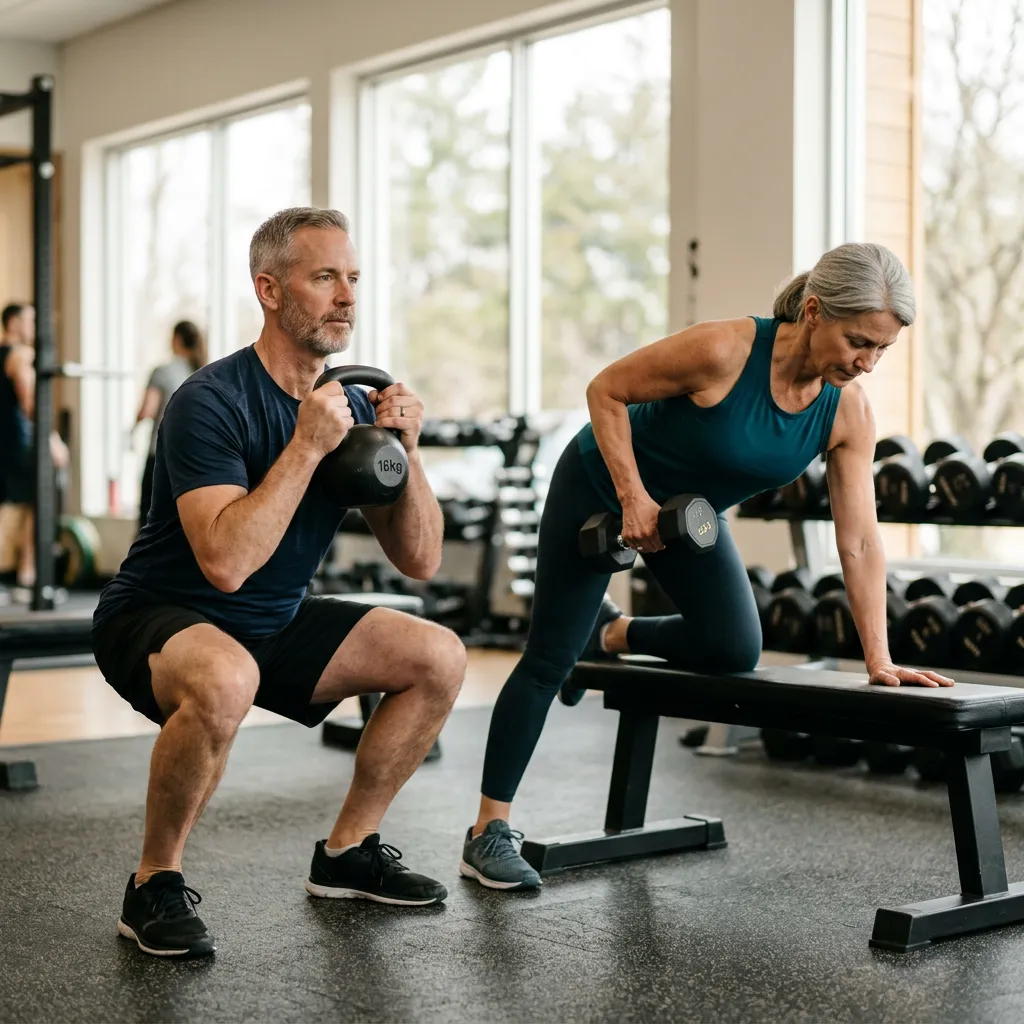
Most people think of cardio when they think about living longer. Cardio matters. But the research on strength training has gotten hard to ignore. Lifting, or any exercise that makes your muscles work against resistance, is linked to lower risk of early death, heart disease, cancer and type 2 diabetes. It also builds muscle and bone at ages when most of us are quietly losing both.
And most adults aren't doing it. In 2020, only 31% of U.S. adults met the national guideline for muscle-strengthening activity, and just 24.2% met both the aerobic and strength guidelines.1 Among men 65 and older, 15.3% met both. Among women 65 and older, 10.8%.1
Here's what the research shows, and how little it takes to get started.
The Short Version
→ In large observational studies, people who do muscle-strengthening exercise have about 10–17% lower risk of early death, heart disease, cancer and diabetes.2,3
→ The biggest drop in risk showed up at roughly 30–60 minutes a week. You don't need to live in the gym.2
→ In randomized trials, every type of resistance training tested beat doing nothing for both strength and muscle size.4
→ Adults over 50 still build muscle, and supervised heavy training improved bone density in postmenopausal women with low bone mass.5,7
→ The national guideline: work all major muscle groups at least 2 days a week.9
Strength training and a longer life
The best summary we have comes from a 2022 meta-analysis in the British Journal of Sports Medicine. Researchers pooled 16 prospective cohort studies and compared people who did muscle-strengthening activities with people who didn't. After accounting for aerobic exercise, strength training was linked to:2
→ About 15% lower risk of death from any cause
→ About 17% lower risk of cardiovascular disease
→ About 12% lower risk of cancer overall
→ About 17% lower risk of type 2 diabetes
A separate 2022 meta-analysis in the American Journal of Preventive Medicine found nearly the same thing: resistance training was linked to 15% lower all-cause mortality and 14% lower cancer mortality.3
Two honest caveats. First, these are observational studies. People who lift may differ in other ways from people who don't, so these numbers show an association, not proof of cause. Second, the dose curve was J-shaped. Risk was lowest around 30–60 minutes a week, and the researchers said the effect of much higher volumes is unclear.2 That's good news for busy people: two or three short sessions a week lands you right in the sweet spot.
It's not too late to build muscle
Muscle mass and strength drift down with age, and that loss is a big part of why everyday tasks get harder later in life. The encouraging part is that muscle keeps responding to training for decades.
A meta-analysis of 49 studies in adults 50 and older found that resistance training added an average of 1.1 kg (about 2.4 pounds) of lean body mass. Higher-volume programs produced bigger gains. Older participants gained somewhat less, but they still gained.5
Even in older adults who already have sarcopenia (age-related muscle loss), a 2025 network meta-analysis of 13 randomized trials found that resistance training improved grip strength, a simple marker tied to overall health. The best results came from about 3 sessions a week at moderate loads.6
What kind of training works best?
The largest analysis to date, published in 2023, pooled 178 randomized trials (more than 5,000 healthy adults) for strength and 119 trials for muscle size. Every resistance training approach tested beat the no-exercise group for both outcomes.4
Some approaches did edge out others:
→ For strength: heavier loads (above about 80% of your one-rep max), multiple sets, three days a week ranked highest.
→ For muscle size: most approaches worked about equally well, with multiple sets twice a week near the top.
The takeaway is simple. The best program is one you'll actually do. Heavier lifting builds more strength over time, but you can start with bodyweight or light weights and progress from there.
Strength training and bone
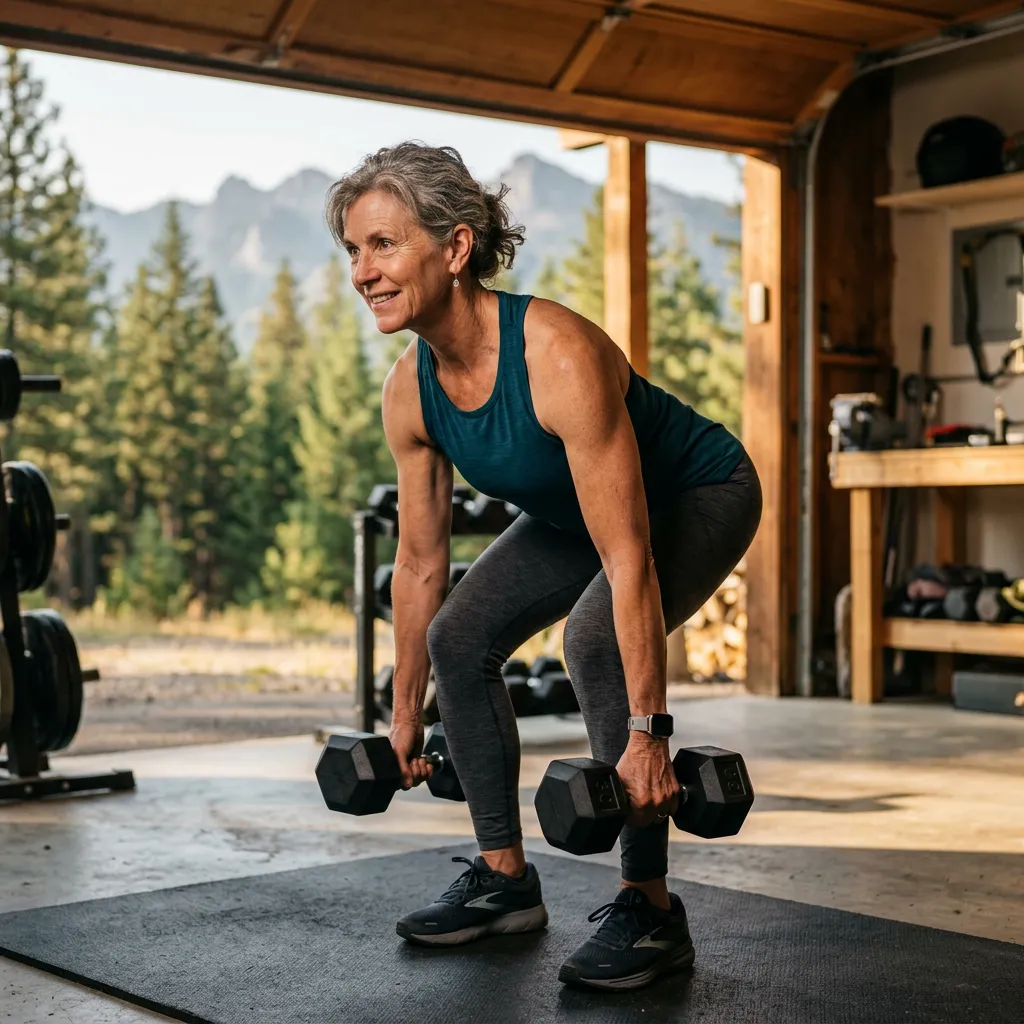
Bone responds to load the same way muscle does. In the LIFTMOR randomized trial, 101 postmenopausal women with low bone mass (average age 65) did either supervised high-intensity resistance and impact training or a low-intensity home program. Training was twice a week, 30 minutes per session, for 8 months.7
Lumbar spine bone density went up 2.9% in the high-intensity group and down 1.2% in the comparison group. At the hip (femoral neck), it rose 0.3% versus falling 1.9%. Only one minor adverse event (a low back spasm) was reported.7
One important detail: this was closely supervised training with careful progression. If you have low bone density, work with your provider and a qualified trainer before lifting heavy.
Don't forget protein
Training is the signal. Protein is part of the raw material. A meta-analysis of 49 randomized trials found that extra protein modestly boosted strength-training gains in muscle mass and strength. The benefit leveled off at a total protein intake of about 1.6 grams per kilogram of body weight per day, and the added boost from protein got smaller with age.8
For a 180-pound person, that's roughly 130 grams a day, and most of it can come from food: eggs, Greek yogurt, fish, poultry, lean meat, beans and lentils. Your right number depends on your health, kidney function and goals, so it's worth a conversation with your provider.

What you can do
→ Start with two days a week. Work all major muscle groups: legs, hips, back, chest, shoulders, arms and core.9
→ Build around big movements: squats, hinges (like a deadlift or hip bridge), pushes, pulls and carries.
→ Aim for about 30–60 minutes a week to start. That's where the observational data showed the biggest drop in risk.2
→ Progress gradually. When a set feels easy, add a little weight or a few reps. Form first, then load.
→ Keep your cardio. The guidelines call for both, plus balance work as you get older.9
→ Eat enough protein from real food spread across your meals.8
The bottom line
Strength training is one of the best-studied habits for staying healthy and independent as you age. It doesn't take hours. Two or three focused sessions a week, done consistently, puts you ahead of most adults. Here in the Inland Northwest, that strength pays off every time you hike a steep trail, carry a kayak to the lake or shovel the driveway in January.
If you have heart disease, joint problems, low bone density or haven't exercised in a while, check in with your provider before starting a new program.
Dr. Cody Belkoff, DO is a physician at Prime Body Solutions in Liberty Lake, WA.
This article is for educational purposes only and is not medical advice. Talk with your provider before starting a new exercise program or changing your diet.
References
- Elgaddal N, Kramarow EA, Reuben C. Physical activity among adults aged 18 and over: United States, 2020. NCHS Data Brief No. 443. National Center for Health Statistics; 2022. cdc.gov/nchs/products/databriefs/db443.htm
- Momma H, Kawakami R, Honda T, Sawada SS. Muscle-strengthening activities are associated with lower risk and mortality in major non-communicable diseases: a systematic review and meta-analysis of cohort studies. Br J Sports Med. 2022;56(13):755-763. doi.org/10.1136/bjsports-2021-105061 (meta-analysis of observational studies)
- Shailendra P, Baldock KL, et al. Resistance training and mortality risk: a systematic review and meta-analysis. Am J Prev Med. 2022;63(2):277-285. doi.org/10.1016/j.amepre.2022.03.020 (meta-analysis of observational studies)
- Currier BS, Mcleod JC, Banfield L, et al. Resistance training prescription for muscle strength and hypertrophy in healthy adults: a systematic review and Bayesian network meta-analysis. Br J Sports Med. 2023;57(18):1211. doi.org/10.1136/bjsports-2023-106807
- Peterson MD, Sen A, Gordon PM. Influence of resistance exercise on lean body mass in aging adults: a meta-analysis. Med Sci Sports Exerc. 2011;43(2):249-258. doi.org/10.1249/MSS.0b013e3181eb6265
- Li HR, Huang S, Yv Z, et al. Optimal dose of resistance training to improve handgrip strength in older adults with sarcopenia: a systematic review and Bayesian model-based network meta-analysis. Front Physiol. 2025;16:1564988. doi.org/10.3389/fphys.2025.1564988
- Watson SL, Weeks BK, Weis LJ, et al. High-intensity resistance and impact training improves bone mineral density and physical function in postmenopausal women with osteopenia and osteoporosis: the LIFTMOR randomized controlled trial. J Bone Miner Res. 2018;33(2):211. doi.org/10.1002/jbmr.3284
- Morton RW, Murphy KT, McKellar SR, et al. A systematic review, meta-analysis and meta-regression of the effect of protein supplementation on resistance training-induced gains in muscle mass and strength in healthy adults. Br J Sports Med. 2018;52(6):376. doi.org/10.1136/bjsports-2017-097608
- U.S. Department of Health and Human Services. Physical Activity Guidelines for Americans, 2nd edition. 2018. odphp.health.gov (Executive Summary)

