
How Tirzepatide Works: GLP-1/GIP Explained | Spokane
If you’ve spent more than ten minutes researching weight loss medications, you’ve seen the word Tirzepatide used in roughly the same way people use the word “quantum” — as a vaguely impressive label that nobody fully explains. That stops here.
Tirzepatide is not a fat-melting potion. It’s not a metabolism “hack.” It’s a precisely engineered peptide that mimics two naturally occurring hormones in your body and uses them to do what those hormones already do — just more, and on a more reliable schedule than your pancreas was managing on its own.
Below is the actual mechanism, written for an intelligent adult who wants to understand the biology rather than be marketed at.
What Tirzepatide Actually Is
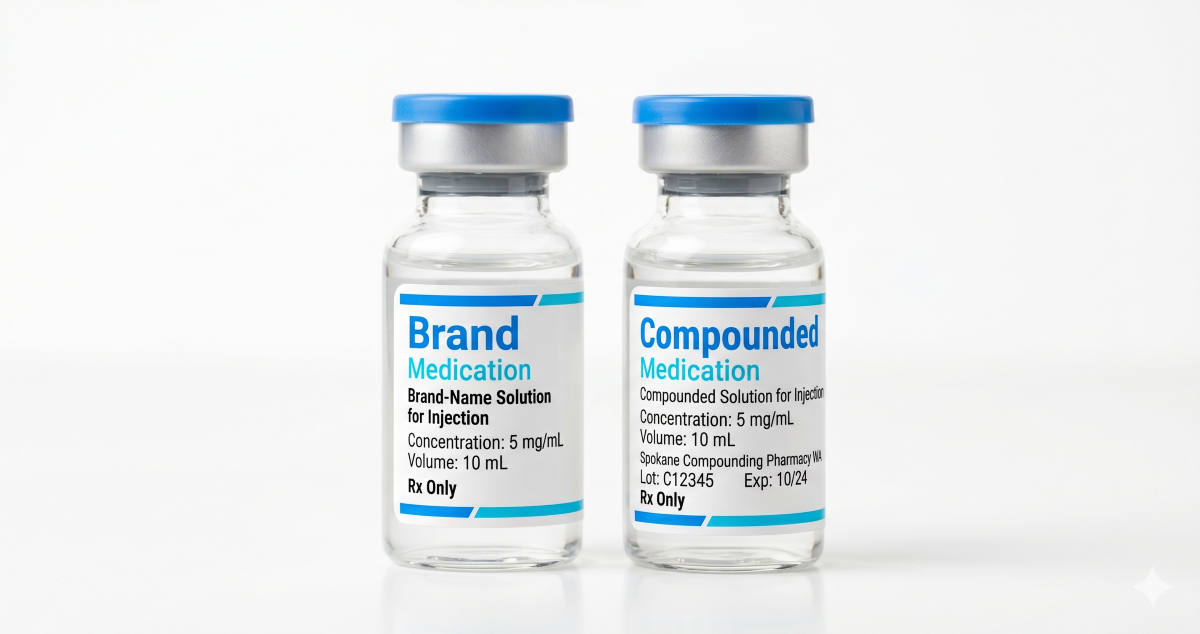
Tirzepatide is a once-weekly injectable peptide medication. The brand name versions are Mounjaro (FDA-approved for type 2 diabetes) and Zepbound (FDA-approved for chronic weight management). Both contain the same active compound. The marketing is different. The molecule is identical.
It belongs to a class called dual incretin agonists. “Incretin” is the gut-hormone family that tells your pancreas when to release insulin and tells your brain when you’re full. Tirzepatide activates two of those receptors at once — GLP-1 and GIP — which is why it’s called a “dual agonist.” Other GLP-1 medications (Ozempic, Wegovy, semaglutide) only activate one. Whether the second receptor matters as much as a large pharmaceuticals marketing team would like is a topic for a different post, but the short answer is: probably yes, and the data supports it. To learn more about the differences click tirzepatide vs semaglutide.
The Two Hormones It Mimics
GLP-1 (Glucagon-Like Peptide-1)
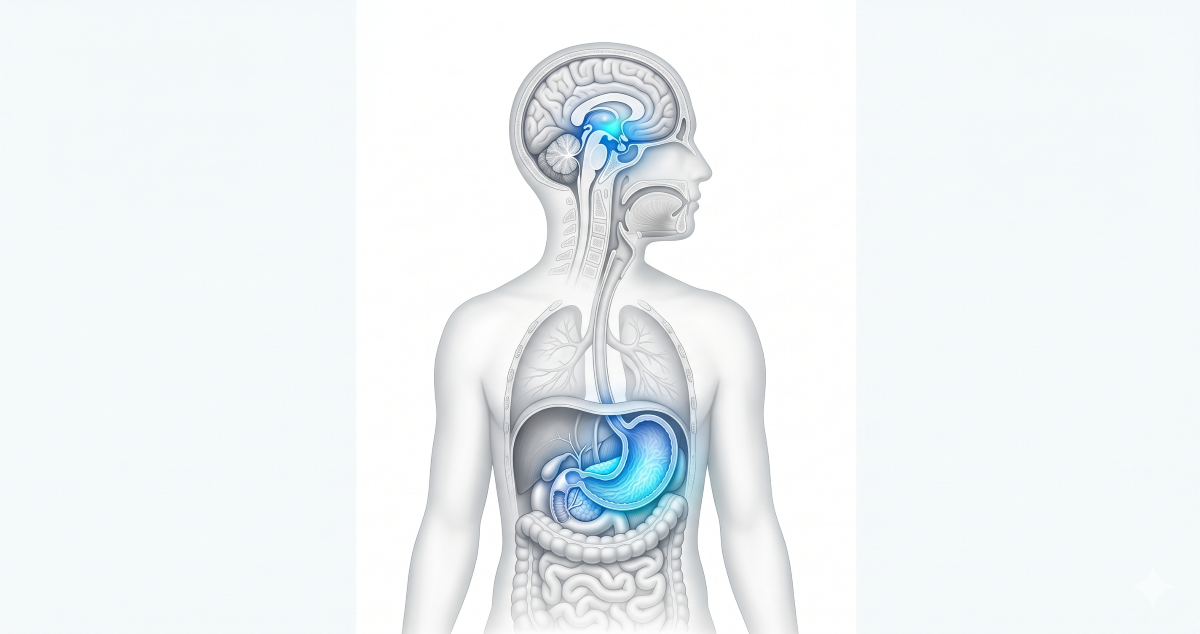
GLP-1 is a hormone your small intestine produces in response to food. Its job description is short and demanding:
Tell the pancreas to release insulin when blood sugar is rising
Tell the liver to stop dumping stored glucose into the bloodstream
Slow down stomach emptying so you feel full longer
Send a “we’re done eating” signal to the appetite-regulation center in the hypothalamus
In a metabolically healthy person, GLP-1 does this on a tight, well-timed schedule. In a person with insulin resistance, type 2 diabetes, or obesity, the signal is muted, delayed, or both. Tirzepatide replaces that missing signal — with a half-life of about five days, which means one injection covers a full week of meals.
GIP (Glucose-Dependent Insulinotropic Polypeptide)
GIP is the second incretin, and it’s the one most weight-loss content quietly ignores because the name is unwieldy. GIP also boosts insulin release after meals, but its more interesting role is in fat tissue: it appears to improve how your body stores and metabolizes fat, and may enhance the appetite-suppressing effects of GLP-1 when both are activated together. Activating GIP alone doesn’t do much for weight loss. Activating GIP while also activating GLP-1 appears to be where the magic — sorry, the measurable additive effect — happens.
What This Does Inside Your Body, Step by Step
Here’s what happens after a Tirzepatide injection — not in marketing-speak, but in the order it actually occurs:
Hour 0–24: The peptide enters the bloodstream from the subcutaneous injection site. Peak plasma levels hit around 24–48 hours.
Stomach: Gastric emptying slows. Food sits in your stomach longer. You feel full sooner and stay full longer. (This is also why nausea is the most common side effect — your stomach is now a slower-moving conveyor belt, and overloading it has consequences. We cover that in side effects management.)
Pancreas: Insulin secretion becomes appropriately responsive to meals. Glucagon (the hormone that tells your liver to release stored sugar) drops. Blood sugar stabilizes.
Brain (hypothalamus & reward centers): Appetite signaling shifts. Patients consistently describe this as “food noise going quiet” — the constant background chatter about what to eat next simply turns down. This is not willpower. This is neurobiology.
Fat tissue (via GIP): Improved insulin sensitivity, modulated lipid storage, modest improvements in markers of metabolic flexibility.
The cumulative result, in a clinical setting, is consistent calorie deficit without the cognitive drain of fighting hunger all day. In the SURMOUNT-1 trial published in the New England Journal of Medicine, participants on the highest dose lost an average of 20.9% of body weight over 72 weeks. That is not a typo, and it is not a small number. (For context, the previous best-in-class drug had averaged around 15%.)
Ready for a Real Conversation About Tirzepatide?
If you live in Spokane, Spokane Valley, Liberty Lake, Post Falls, or Coeur d’Alene and you’re wondering whether Tirzepatide is appropriate for your metabolism — not a hypothetical patient’s — Prime Body Solutions runs a physician-led program with personalized dosing, in-person follow-ups, and integrated hormone optimization. Book a 15-minute phone consultation or call (509) 601-4700. No pressure, no upsells, just a doctor’s perspective on whether this is a fit for you.
Why Dual Action Beats Single Action (Probably)
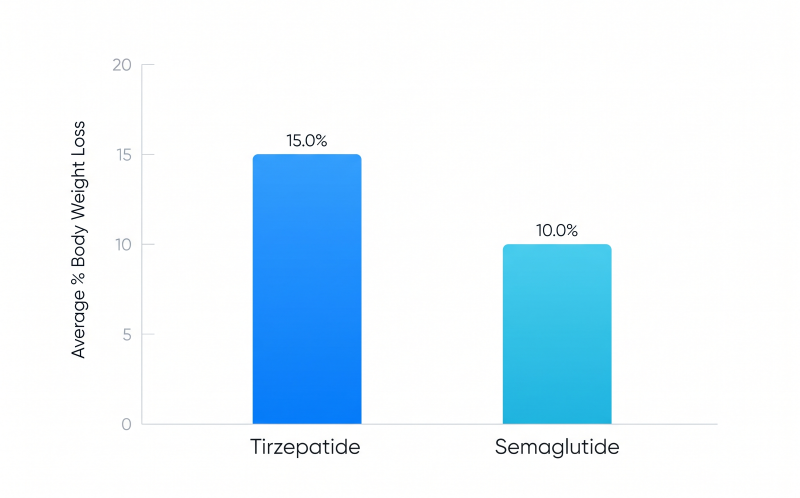
The honest answer is “we have strong evidence but not yet decades of head-to-head data.” The strongest comparison so far — the SURMOUNT-5 trial, published in NEJM in 2025 — directly compared Tirzepatide to semaglutide for weight loss in adults with obesity (without diabetes). Tirzepatide produced significantly greater weight loss than semaglutide at every measured time point.
So: dual agonism appears to outperform single agonism, with side-effect profiles that are similar in kind (gastrointestinal) and similar in severity. The catch — there’s always a catch — is that “more effective” also means “more potent biological signal,” which means careful titration and clinical supervision actually matter. This is not a medication that benefits from being mailed to you with a video tutorial.
Who Is Tirzepatide Actually For?
Tirzepatide is FDA-approved for:
Adults with type 2 diabetes (Mounjaro)
Adults with obesity (BMI ≥ 30) or overweight (BMI ≥ 27) with at least one weight-related condition like hypertension, sleep apnea, dyslipidemia, or cardiovascular disease (Zepbound)
It is not for cosmetic weight loss in metabolically healthy adults, despite what Instagram suggests. It is not for adolescents (yet — pediatric trials are ongoing). It is contraindicated in patients with a personal or family history of medullary thyroid carcinoma or MEN-2 syndrome, and should be used with caution in pregnancy, severe gastroparesis, and active pancreatitis.
A real consultation will involve labs, a complete medical history, a discussion of your goals, and — this is the part most online providers skip — a candid conversation about what happens after you hit your goal weight. That part actually matters more than the loss itself, which is why we wrote a separate post on long-term maintenance and weight regain.
What Tirzepatide Does Not Do
Because the marketing is loud, here’s a deliberately quiet list of what this medication does not do:
It does not “burn” fat. It enables a calorie deficit by reducing intake.
It does not build muscle. In fact, weight lost on Tirzepatide includes lean mass — which is why pairing it with resistance training and adequate protein is non-negotiable.
It does not “fix” your metabolism permanently. Stop the medication, and the appetite signal returns to baseline within weeks.
It does not replace addressing root causes — sleep, stress, hormones, insulin resistance, food environment.
It does not work in isolation. The patients with the best long-term outcomes treat it as one tool in a deliberate metabolic strategy, not a single intervention.
Frequently Asked Questions
How does Tirzepatide make you lose weight?
By activating GLP-1 and GIP receptors, it slows gastric emptying, reduces appetite signaling in the hypothalamus, improves insulin sensitivity, and modulates fat storage. The net effect is a sustained, low-effort calorie deficit.
Is Tirzepatide a GLP-1?
Sort of. It’s a dual GLP-1 / GIP receptor agonist. Pure GLP-1 medications (semaglutide, liraglutide) activate only the GLP-1 receptor; Tirzepatide activates both.
How long does it take Tirzepatide to start working?
Appetite suppression begins within days of the first dose. Visible weight loss typically begins within the first 4 weeks, with the most consistent loss occurring between weeks 8 and 24 as the dose is titrated upward.
Does Tirzepatide affect metabolism?
Yes — it improves insulin sensitivity and modulates how fat is stored and used. It does not, however, increase your basal metabolic rate. Loss is driven by reduced intake, not increased burn.
Will I gain the weight back if I stop Tirzepatide?
Without lifestyle changes, partial regain is common. With a structured maintenance protocol (resistance training, protein intake, sleep, and often a lower maintenance dose), long-term success is achievable. We cover this in detail on a post called long-term maintenance after tirzepatide.
Talk to a Spokane Doctor Who Actually Treats This
Tirzepatide is a powerful tool. It rewards careful clinical use and punishes the assembly-line approach. Prime Body Solutions, located in Liberty Lake just east of Spokane, offers physician-led Tirzepatide programs with personalized dosing, integrated hormone optimization, and in-person follow-ups — not a chatbot triage system.
Schedule your Tirzepatide consultation or call (509) 601-4700.
Medically reviewed by Dr. Cody Belkoff, DO — Medical Director, Prime Body Solutions
Last reviewed: May 2026
Prime Body Solutions | 2110 N Molter Rd, Suite 119, Liberty Lake, WA 99019 | (509) 601-4700
Serving Spokane, Spokane Valley, Liberty Lake, Post Falls, and Coeur d’Alene
This article is for educational purposes and does not constitute medical advice. Tirzepatide is a prescription medication; appropriate use requires evaluation by a licensed clinician.
